
Looking for
Varicocele Treatment in East Africa?
What is Varicocele?
A varicocele is a cluster of swollen, dilated veins within the loose pouch of skin holding the testicles (the scrotum), formed by the pampiniform plexus of veins.
Normally, one-way valves inside these veins ensure that blood flows smoothly upward toward the heart. When these valves weaken or fail, gravity causes blood to flow backward and pool in the scrotum. This creates increased pressure, heat, and stretching of the vein walls—very similar to how varicose veins develop in the legs.
Varicoceles affect roughly 15% of all adult men. While many cause no symptoms, others can lead to a dull, aching heaviness in the scrotum, progressive testicular shrinkage (atrophy), or male infertility by altering the temperature and microenvironment required for healthy sperm production.
Causes of Varicocele
Several anatomical and physiological factors contribute to this:
Gravity and Anatomy: The left spermatic vein enters the left renal (kidney) vein at a right angle, and is longer than the right vein, resulting in higher pressure. This is why approximately 85% to 90% of varicoceles develop on the left side (though bilateral varicoceles affecting both sides can also occur).
Defective Vein Walls: Weakness in the collagen and muscular walls of the veins makes them more susceptible to stretching under normal blood pressure.
Secondary Causes (Rare): In older men, a sudden-onset varicocele can occasionally be caused by an abdominal or retroperitoneal mass (such as a tumor) compressing the spermatic vein, which requires medical evaluation.
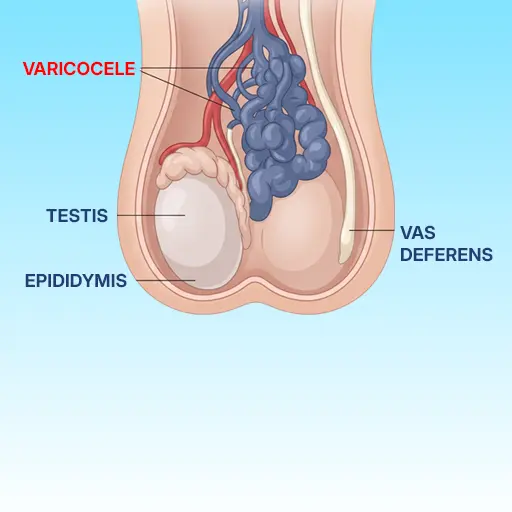
The primary cause of a varicocele is valvular malfunction (venous reflux) within the internal spermatic veins.
Normally, one-way valves inside these veins act like check-valves, allowing blood to flow upward toward the heart against gravity while preventing it from flowing backward. When these valves weaken or fail, blood leaks backward and pools in the scrotum.
Stages and Grading of Varicoceles
Physicians categorize varicoceles into specific grades based on their size and how easily they can be detected during a physical examination:
Subclinical Varicocele
Completely undetectable via physical exam, but identified incidentally during imaging tests. These rarely require treatment unless linked to fertility issues.
Grade 1 (Small / Subclinical)
The varicocele cannot be seen and is difficult to feel by hand, but it is detected using specialized diagnostic tools such as color Doppler ultrasound, which reveals abnormal backward blood flow.
Grade 2 (Moderate / Palpable)
The varicocele cannot be easily seen by eye, but it is readily felt by the physician during a routine physical examination while standing.
Grade 3 (Large / Visible)
The varicocele is large enough to be easily seen through the skin of the scrotum without needing to touch it. It is often described as feeling like a “bag of worms.”

Symptoms of a Varicocele
While many men live with a varicocele and experience no symptoms at all, others notice progressive physical signs and health impacts. Common symptoms include:
Aching or Heavy Scrotal Pain: A dull, persistent ache, throbbing, or heavy feeling in the testicles or scrotum.
Worsened Discomfort Over the Day: Pain typically increases after prolonged periods of standing, heavy lifting, or intense physical exertion, and often improves when lying flat on your back.
Visible or Palpable Swelling: An enlarged, twisted cluster of veins above the testicle, often resembling a “bag of worms.”
Testicular Atrophy (Shrinkage): The affected testicle may feel noticeably smaller than the healthy side due to increased temperature and pressure impairing normal tissue development.
Male Infertility: Difficulty conceiving. Varicoceles raise the local temperature inside the scrotum, which can negatively impact sperm count, motility (movement), and morphology (shape). It is one of the most common reversible causes of male factor infertility.

If you experience persistent scrotal discomfort, swelling, a visible cluster of veins, or are facing fertility challenges, an evaluation by a vascular specialist or interventional radiologist is recommended. A simple, non-invasive color Doppler ultrasound can quickly confirm the presence and severity of venous reflux, helping determine if varicocele embolization is the right solution for you.
How to Get Rid of Varicoceles – The Right Way
Varicoceles aren’t just a cosmetic concern — they’re a medical problem. Faulty vein valves cause blood to pool, leading to swelling, discomfort, and, if untreated, testicular atrophy or infertility.
Don’t Fall For Myths
Herbal creams, miracle oils, leech therapy, or unregulated medicines cannot repair damaged veins. These “quick fixes” waste time, give false hope, and may let your condition progress to chronic pain or fertility complications.
The Proven Approach
The only reliable way to treat a varicocele is through a color Doppler ultrasound and evaluation by a qualified vein specialist. Modern, advanced treatments can:
- Find and treat the root cause
- Provide long-term relief
- Prevent serious complications
Bottom line: Don’t risk your health on unproven remedies. Choose expert care for safe, lasting results.
Dr. Saurabh Joshi
Dr. Saurabh Joshi is a renowned vascular and interventional radiologist with over 18 years of expertise in diagnosing and managing complex vascular diseases using the latest, minimally invasive procedures and technologies. He has successfully performed thousands of treatments, including Endovenous Laser Treatment (EVLT), Radiofrequency Ablation (RFA), Sclerotherapy, Uterine Fibroid Embolization (UFE), and Varicocele Embolization. In recent years, he has focused extensively on the VenaSeal procedure for treating Varicose Veins and Venous Ulcers—offering patients a quick, painless, and stitch-free recovery.
As the Founder and Medical Director of The Vein Center, Dr. Joshi leads a dedicated team committed to protocol-based, compassionate care. His work extends beyond India—he is also the driving force behind The Vein Center Tanzania, bringing world-class varicose vein treatments to East Africa and ensuring patients there have access to the same high standards of care.
In addition to running The Vein Center, Dr. Joshi is associated with several leading hospitals in Mumbai, including Kokilaben Dhirubhai Ambani Hospital Navi Mumbai, ACI Cumballa Hill Hospital, and Dr. Bhanushali Hospital Thane.
His excellence in the field has been recognized internationally, winning three prestigious awards, including the Venartis Phlebology Award (2018) for outstanding work in varicose veins treatment. Dr. Joshi is also an active researcher, educator, and speaker at national and international conferences, with several publications in peer-reviewed journals.
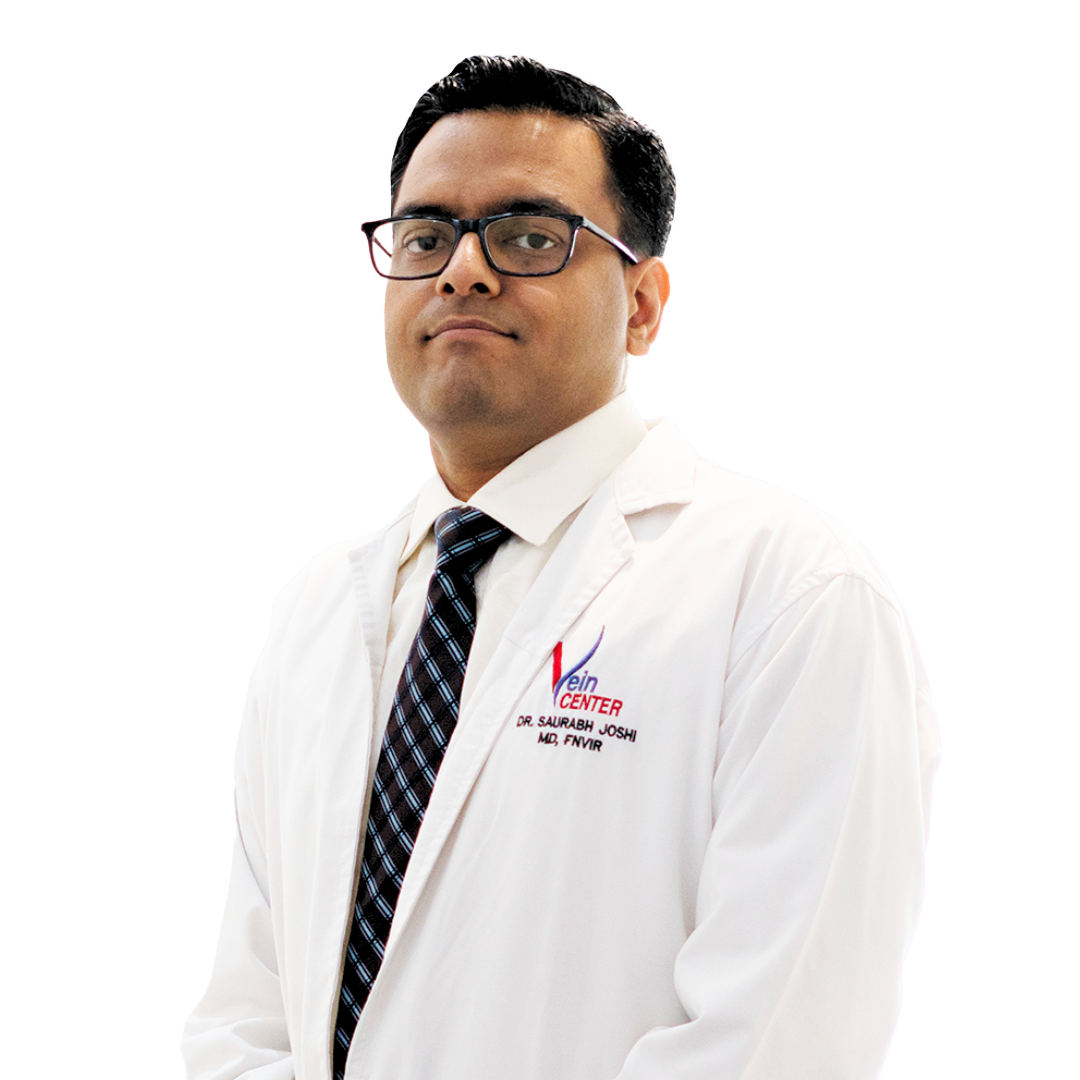
Senior Vascular Specialist
Vascular Surgeon & Interventional Radiologist
(MBBS, MD, FNVIR, MBA)
The Modern Alternative to Surgery: Varicocele Embolization
Historically, treating a varicocele required open or laparoscopic surgery (varicocelectomy), which involved general anesthesia, surgical incisions in the groin or abdomen, and extended downtime.
Today, advances in vascular medicine allow interventional specialists to treat varicoceles through a completely non-surgical, catheter-based procedure known as percutaneous varicocele embolization.
From early days of traditional vein stripping to modern Endovenous Laser Ablation (EVLA / EVLT) and now the revolutionary VenaSeal™ Closure System, our commitment to innovation ensures you receive the safest, most effective, and least invasive solutions available.
How Varicocele Embolization Works
Varicocele embolization is performed on an outpatient basis under mild (conscious) sedation and local anesthesia, requiring zero surgical incisions:
Vascular Access: The specialist numbs a tiny entry point (usually in the groin or wrist) and introduces a microscopic catheter into the vascular system.
Precision Guidance: Using continuous real-time X-ray (fluoroscopy) guidance, the physician navigates the catheter directly into the internal spermatic vein responsible for the varicocele.
Sealing the Faulty Vein: Specialized micro-coils, medical foam, or a sclerosing agent are released inside the targeted vein.
Rerouting Blood Flow: These agents permanently close off the diseased, refluxing vein from the inside. Blood flow is naturally redirected into healthy surrounding pathways, eliminating the pressure pool.
The entire procedure typically takes less than an hour, and patients return home the same day.
Advantages of Embolization
As vein and vascular specialists, we favor minimally invasive embolization for treating varicoceles because it offers profound clinical and lifestyle benefits:
No Surgical Incisions: No scalpels, stitches, or surgical cuts in the groin or scrotum, completely eliminating surgical scarring.
No General Anesthesia: Performed with light sedation, avoiding the grogginess and higher physiological risks associated with general anesthesia.
Faster Recovery: While open surgery can require weeks of restricted movement, embolization patients typically resume normal, non-strenuous daily activities within 24 to 48 hours.
Simultaneous Bilateral Treatment: If varicoceles are present on both the left and right sides, they can easily be corrected in a single session through one entry site.
Equal or Greater Success Rates: Embolization matches the clinical success and pregnancy rates of open surgical ligation while avoiding risks like hydrocele formation (fluid buildup around the testicle).
What to Expect After the Procedure
Post-Procedure Care: Mild soreness or bruising at the catheter access site or a minor dull ache in the flank/abdomen can occur briefly, but these symptoms resolve quickly.
Activity Guidelines: Strenuous lifting and intense workouts should be avoided for about a week, as guided by your physician.
Symptom & Fertility Improvements: Scrotal aching usually diminishes steadily over the subsequent weeks as the trapped veins collapse and absorb. For fertility cases, follow-up semen analyses are typically scheduled 3 to 6 months later to track improvements in sperm count and quality.
Book an Appointment
Online Consultation is Available
Whether you are dealing with chronic venous insufficiency in your lower limbs or looking for expert evaluation for a scrotal varicocele, accurate diagnosis is the first step toward relief.
If you are experiencing symptoms of a varicocele or wish to explore whether minimally invasive embolization is right for you, schedule a consultation with our vascular team today.